Ambulance sirens: what types are there and what do they mean?
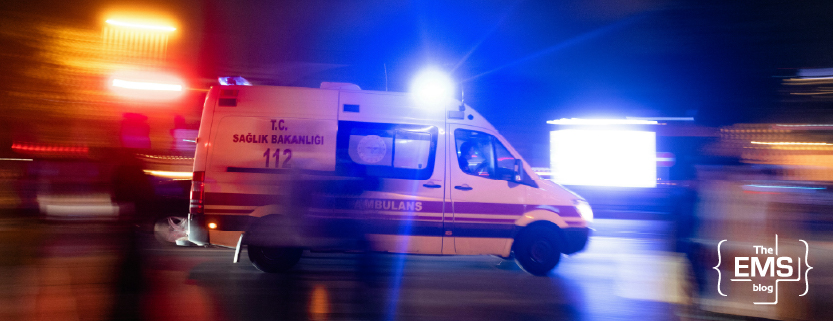
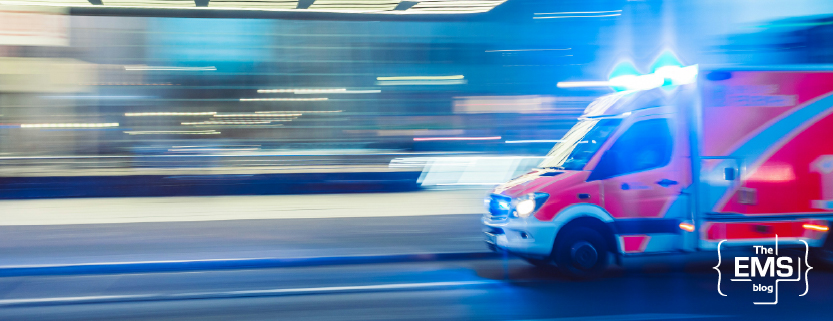
Ambulance sirens can often be heard before the vehicle itself comes into view, while blue flashing lights may be reflected in the surrounding traffic.
These signals immediately attract attention, make emergency vehicles readily identifiable and allow motorists to clear a path. Yet their use also raises several questions. Why do some ambulances travel with both sirens and flashing lights activated, while others use only their lights? Does this always mean that a patient on board is in a life-threatening condition? Which traffic regulations may ambulance drivers disregard?
To answer these questions, it is essential to distinguish between the clinical urgency of an emergency response and the legal exemptions provided under the Italian Highway Code.
Sirens, blue lights or both: what is the difference?
Modern ambulances are commonly equipped with electronic sirens, connected to one or more loudspeakers, and LED warning light systems, positioned at various points around the vehicle to ensure visibility from every direction.
Electronic ambulance sirens can produce different audible signals. Among the most familiar are the two-tone siren, which alternates between two pitches; the wail, characterised by a slower, more gradual variation in pitch; and the yelp, which features more rapid pitch changes. These terms describe the technical characteristics of the signals but do not correspond to different levels of emergency severity established under Italian law.
Do flashing blue lights indicate a less serious emergency?
Likewise, the use of blue flashing lights alone does not necessarily indicate that a patient’s condition is less serious. There is no nationwide rule equating “flashing lights only” with a lower-priority emergency or “siren activated” with a patient in a life-threatening condition.
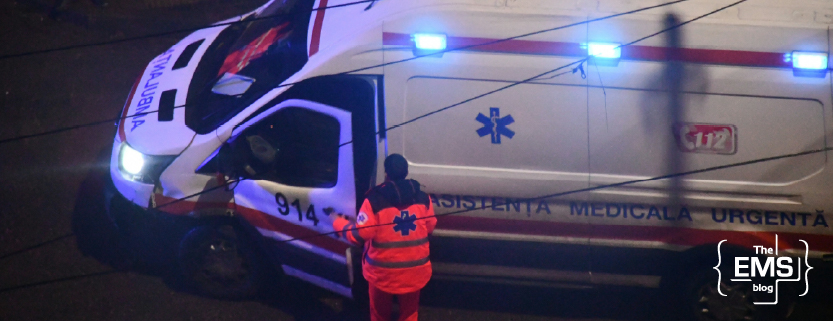
These devices indicate how the emergency service is being carried out, rather than the clinical priority code assigned to the patient. Furthermore, the ambulance may still be travelling to the scene of an incident, with no patient on board.
When ambulance sirens and blue flashing lights are activated simultaneously, they alert other road users to the need to clear a path. Their combined use is also the condition laid down in Article 177 of the Italian Highway Code for ambulance drivers to be permitted to depart from ordinary traffic regulations.
Blue flashing lights alone do not indicate an intermediate level of emergency. Their primary purpose is to increase the vehicle’s visibility, particularly when it is stationary at the scene of an incident. However, they do not grant the driver any exemption from ordinary traffic regulations. On their own, they do not authorise the driver to disregard speed limits, prohibitions or traffic signals. For ambulance drivers, these exemptions apply only when both warning devices are used together (the siren and blue flashing lights). For other motorists, however, the obligation to clear the way arises as soon as the siren is heard.
When can they be used?
Article 177 of the Italian Highway Code permits ambulances to use sirens and flashing lights when responding to urgent service calls.
Simply being an ambulance is therefore not sufficient. A scheduled patient transfer, a return journey to the ambulance station or a non-urgent medical transport does not automatically justify the use of these warning devices.
The Italian Highway Code does not specify which clinical conditions make an ambulance mission urgent. This assessment depends on how the emergency medical service is organised, the protocols followed by the emergency dispatch centre and the conditions identified by the ambulance crew.
The priority code assigned to an emergency call and the manner in which the ambulance is driven are therefore related, but do not necessarily correspond automatically.
What traffic rules can ambulance drivers disregard?
When the siren and blue flashing lights are used together during an urgent mission, the driver may depart from traffic obligations, prohibitions, restrictions, road signs and other rules of conduct. Where necessary, this may include exceeding the speed limit, proceeding through a red traffic light or using a lane that would ordinarily be prohibited.
This does not mean that the driver may proceed without taking precautions. The same provision requires compliance with the instructions of traffic officers and with the general principles of prudence and due care.
Before proceeding through a red light at an intersection, for example, the driver must ensure that other road users have noticed the approaching ambulance and have begun to stop. Sirens and flashing lights signal a request for priority, but they cannot guarantee that other motorists will yield.
Awareness of an approaching ambulance may be delayed by well-insulated vehicle interiors, loud music, heavy traffic, buildings that reflect sound or other vehicles obstructing the view of its blue flashing lights.
An ambulance therefore does not enjoy an unconditional right of way. Its driver may depart from ordinary traffic rules when the mission requires it, but must continuously assess the behaviour of other road users and the safety of every manoeuvre.
The study “The effectiveness of lights and siren use during ambulance transport by paramedics”, conducted across 75 ambulance transports in the United States, found an average time saving of 3 minutes and 50 seconds when lights and sirens were used. According to the researchers, this reduction in journey time resulted in an identifiable clinical benefit for the patient in four cases.
What should other motorists do?
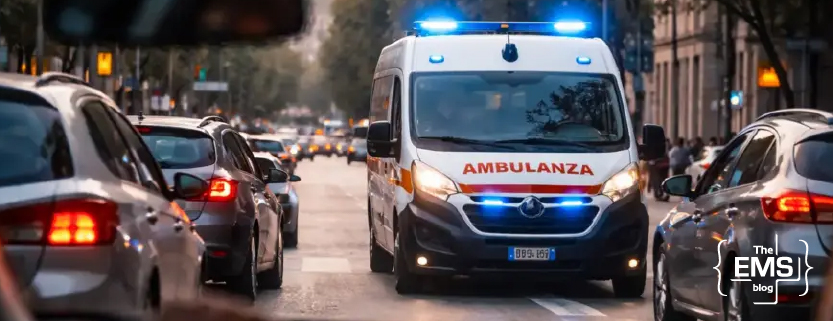
When they hear an ambulance siren, road users must clear the way and, where necessary, stop. This obligation also applies to drivers travelling along side roads who are approaching a junction with the ambulance’s route.
Their response, however, should never be abrupt. To make way for an emergency vehicle safely and effectively, motorists should:
- Identify the direction from which the siren is coming, carefully checking their mirrors and nearby intersections.
- Reduce their speed gradually, without braking suddenly.
- Signal any intended change of position well in advance using their direction indicators.
- Move towards the edge of the carriageway and stop when necessary, leaving sufficient room for the ambulance to pass.
- Avoid sudden lane changes, particularly when the ambulance’s intended route is not yet clear.
If traffic is stationary at a red light, the arrival of an ambulance does not automatically authorise other motorists to enter the intersection or cross the stop line. The exemptions provided under Article 177 apply to the ambulance, not to other vehicles.
Drivers must create space wherever reasonably possible, without undertaking dangerous manoeuvres. They should not mount the pavement, suddenly enter an oncoming traffic lane or stop in a position that further narrows the carriageway.
Near a bend, roundabout or intersection, it may be safer to slow down and keep the area clear rather than stop immediately in an unsuitable location.
The law also prohibits drivers from following an ambulance closely to take advantage of the gap it creates in traffic. Such behaviour may catch motorists off guard as they resume driving after the emergency vehicle has passed, potentially causing another collision.
How do the rules differ around the world?
Regulations are not identical across countries. In some cases, even the significance of blue flashing lights used on their own differs.
In Germany, the system is similar to that in Italy. Blue flashing lights and an audible warning device are used together in situations of extreme urgency, such as when it is necessary to save a life or prevent serious harm to someone’s health. Other road users must then clear the way immediately. Blue flashing lights alone may be used to mark the scene of an incident, escort other vehicles or increase the visibility of a vehicle engaged in an emergency operation. However, they do not impose the same obligation on other road users to give way.
In France, the principal distinction concerns the category of ambulance involved. Vehicles belonging to hospital-based mobile emergency units operating within the SAMU or SMUR system are classified as priority vehicles. Conventional ambulances used for medical transport, by contrast, benefit from more limited traffic privileges. Not all ambulances therefore enjoy the same exemptions: these depend on the type of service they are providing.
Ambulance warning lights and sirens in the UK and USA
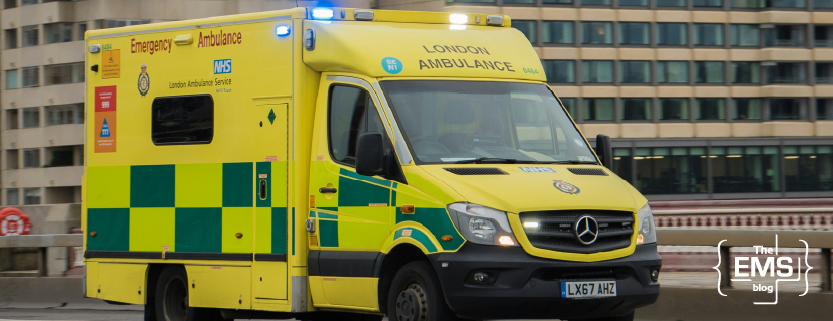
In the United Kingdom, ambulances may signal their approach using blue flashing lights, sirens and, in some circumstances, flashing headlights. The Highway Code instructs motorists to observe the emergency vehicle’s intended route and facilitate its passage. Nevertheless, other road users must continue to obey traffic lights and road signs. They must not mount the pavement, brake sharply or perform manoeuvres that could endanger pedestrians or other vehicles.
In the United States, there is no single configuration applicable throughout the country. Emergency Medical Services (EMS) and many of the regulations governing the use of ambulance sirens and warning lights are organised at state or local level. The colours used also vary. In some states, ambulances predominantly display red warning lights; elsewhere, combinations of red, blue and white are permitted. Certain colours may also identify vehicles operated by volunteers or particular categories of emergency responders.
Recognisable signals, but not infallible
Sirens and flashing lights form the signalling system through which an ambulance communicates its need to move swiftly through traffic. They do not, however, reveal the patient’s medical condition, whether someone is already on board or which priority code has been assigned by the emergency dispatch centre. Their effectiveness depends on the technology employed and how it is installed, but also on the behaviour of the ambulance driver and every other road user.
Recognising these signals and knowing how to respond can help prevent the loss of precious seconds without introducing additional risks into an already critical situation.