
The main injuries among rescuers and how to reduce them
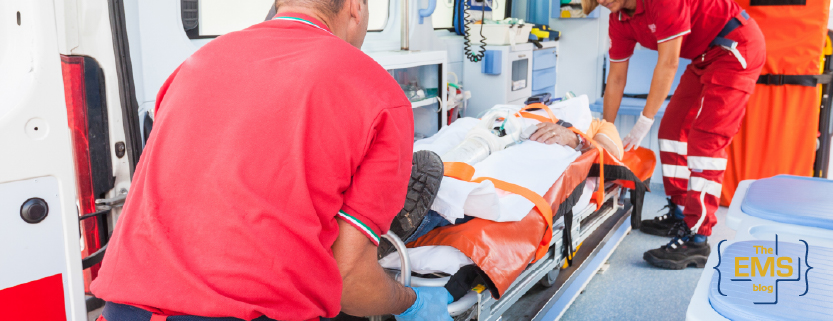
In emergency medical services, attention is rightly focused on the patient. Yet behind every intervention are professionals who face physical strain, awkward postures, and complex operational scenarios every single day—often in confined spaces and under emergency conditions. It is no coincidence that prehospital care is among the activities with the highest risk of injuries, particularly musculoskeletal disorders.
Talking about ergonomics in emergency care therefore means talking about prevention, safety, and work quality, with one clear objective: protecting those who save lives.
The most common injuries affecting emergency responders
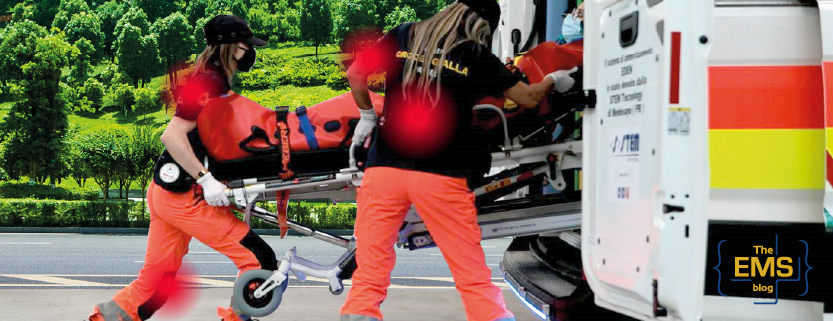
Technical literature and healthcare service documentation agree on one point: the most frequent injuries in emergency care are related to physical exertion and patient handling. According to reports from the Emilia-Romagna Regional Health Service, the most significant occupational risks for healthcare workers include:
- lower back pain and dorsolumbar disorders;
- sprains and muscle strains;
- biomechanical overload of the upper and lower limbs, directly linked to manual patient handling and the use of equipment that is not ergonomically designed.
These risks are compounded by:
- slips and falls, often occurring during stretcher loading and unloading or in uncontrolled environments;
- injuries related to road traffic accidents involving the emergency vehicle and crew;
- accidental exposures (sharp objects, biological fluids), which are less directly related to ergonomics but remain relevant within the overall risk profile of emergency responders.
INAIL, in its documentation on work-related musculoskeletal disorders, highlights that activities involving lifting, pulling, and forced postures are among the leading causes of absenteeism and reduced operational capacity.
How can injuries in emergency care be prevented?
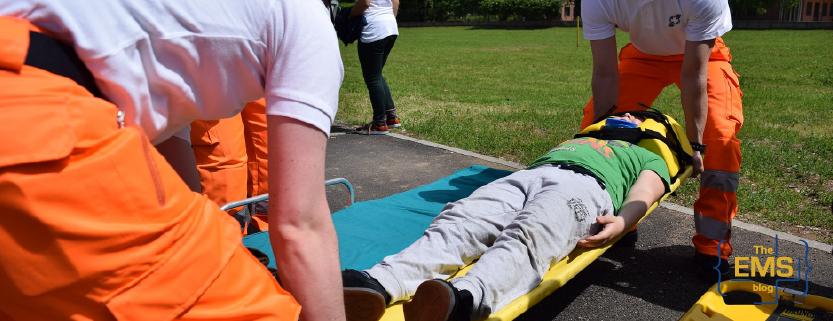
Prevention relies on a combination of factors:
- operator training;
- work organisation;
- ergonomic equipment design;
- compliance with relevant technical standards.
In prehospital emergency care in particular, the ergonomics of transport equipment play a key role. Reducing physical effort during stretcher loading, unloading, and handling directly translates into a lower risk of musculoskeletal injuries.
The EN 1865 series
Alongside occupational safety regulations, specific European technical standards have been developed to make operators’ work safer. A key reference is the EN 1865 series of European standards, which define safety and ergonomic requirements for stretchers and their support systems.
Within this series, EN 1865-5 specifically addresses stretcher supports—devices that directly affect loading and unloading operations.Annex B of the standard is particularly relevant from an ergonomic standpoint. It defines handling tests and establishes the maximum manual forces that operators may apply to move the stretcher support laterally, forwards, and backwards. The aim is to keep human effort within limits compatible with operator physical safety, taking into account real-world ambulance operating conditions.
The EN 1865 series also includes EN 1865-2, which is dedicated to electric stretchers. This standard defines safety and performance requirements for motorised lifting systems, with specific reference to motion control, load stability, and the reduction of manual intervention by the operator.
Stem’s contribution: ergonomics applied to emergency care
Stem has always designed solutions that place safety, ergonomics, and operational reliability at their core.
All Stem stretcher supports comply with the European EN 1865-5 standard, including Annex B, and meet the prescribed force limits for manual handling. This means that ergonomics is not an optional feature, but a verified design requirement validated through specific testing.
Sherpa and Sherpa Slim eliminate physical effort during loading
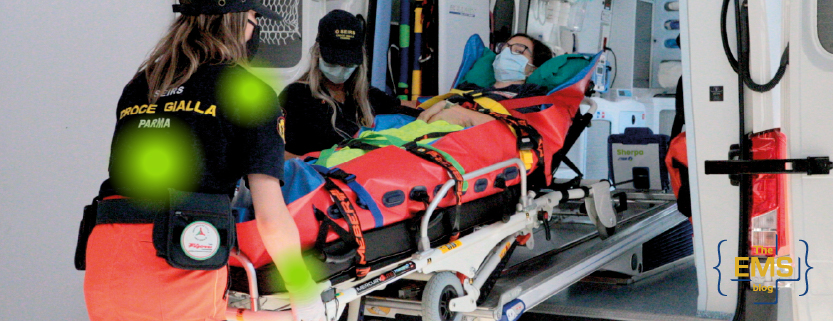
To further reduce the risk of injury, Stem developed Sherpa and Sherpa Slim —electronically controlled assisted loading and unloading systems for stretchers.
These devices:
- eliminate operator physical effort during loading;
- allow the handling of loads up to 300 kg, even on a 15° incline;
- are compatible with the majority of stretchers available on the market.
A key element is the S.U.S. (Safe Unload System), patented by Stem, which prevents the stretcher from falling if the front legs fail to deploy during unloading. This drastically reduces the risk of accidents and trauma for both the operator and the patient.
Safety in the event of a collision
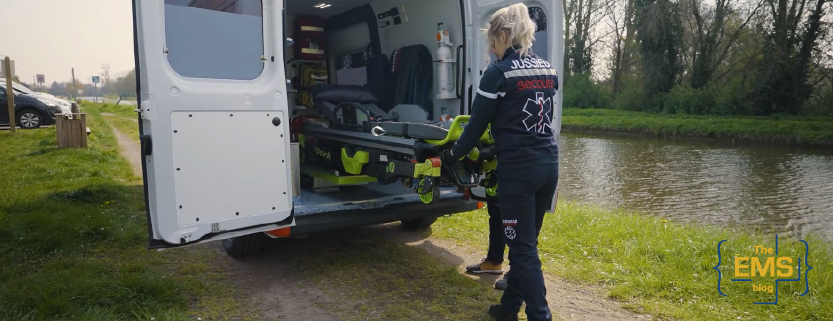
Another often underestimated aspect concerns road accidents involving ambulances. In such scenarios, inadequately secured equipment can become a serious hazard for both patients and crew.
The European standard EN 1789, which defines requirements for emergency medical vehicles, introduces 10 g crash tests to verify the resistance of equipment restraint systems in the event of a collision.
All Stem products are tested at 10 g and, in some cases, at 20 g, ensuring that stretchers and supports remain secured and do not cause additional harm during a crash.
Spark, safety and stability during transport
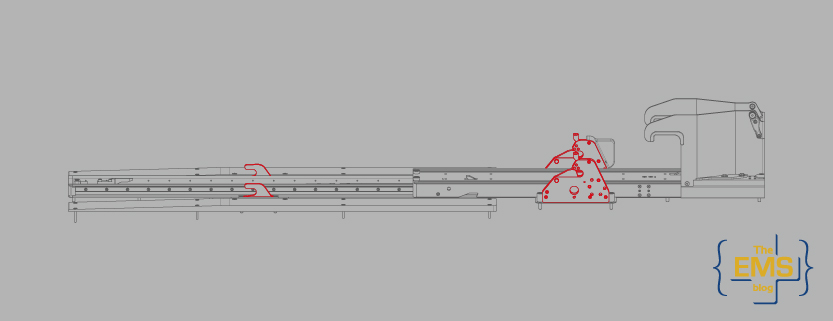
The Spark stretcher, compliant with EN 1865-2, follows the same safety-driven approach. It is also equipped with a four-point fastening system that makes the stretcher and undercarriage a single integrated unit.
In the event of a collision during ambulance transport, the entire system remains anchored to the vehicle floor, enhancing safety for both the patient and the operators.
Ergonomics means protection
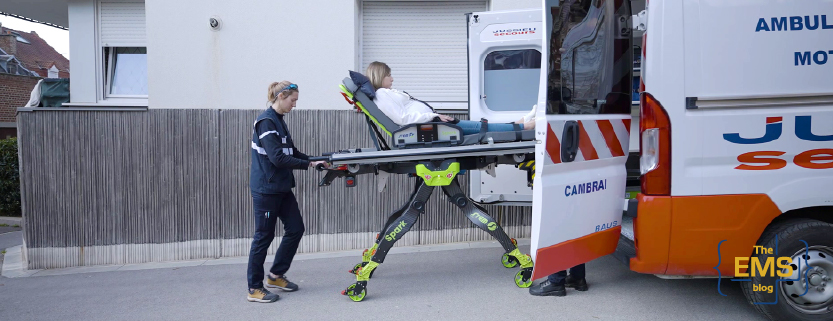
Talking about ergonomics in emergency care means measurably reducing the daily risks faced by emergency responders. Standards such as the EN 1865 series and EN 1789, together with solutions designed according to verifiable ergonomic criteria, demonstrate that injury prevention is achievable.
Protecting those who are first on the scene is not only a regulatory responsibility—it is an ethical and operational duty.
And are you sure that the products you work with comply with current regulations and are ergonomically designed to prevent injuries?