
Polytrauma: from field intervention to patient stabilization
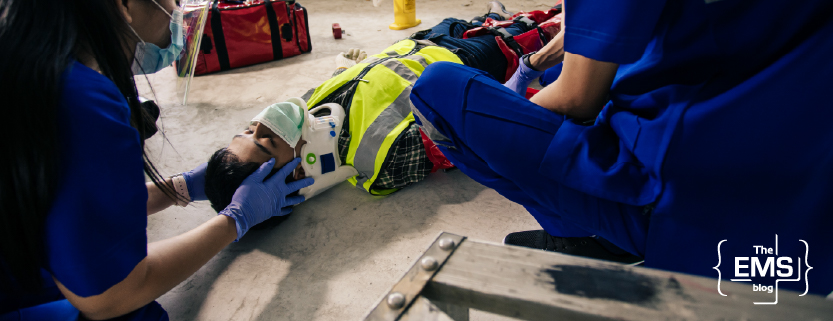
In Europe, trauma is the leading cause of death among people under forty and one of the main causes of permanent disability. Every year, thousands of people lose their lives to multiple injuries that, in many cases, could be successfully treated through prompt and coordinated action. In emergency medicine, this condition is known as polytrauma.
What is polytrauma
A patient is considered polytraumatized when they suffer severe injuries in multiple body regions, at least one of which is potentially life-threatening. It is a condition that demands an immediate, multidisciplinary approach based on precise protocols and a chain of interventions that accompanies the patient from the accident site to hospital stabilization.
Polytrauma patients fall into the category of “severely injured.” The most frequent causes include road traffic accidents, followed by falls from height, occupational injuries, sports accidents, and high-energy events such as explosions or crush injuries.
The main stages in polytrauma management are four:
- Pre-hospital phase and on-scene rescue
- Transport to the designated trauma center
- Hospital admission and trauma team activation
- Stabilization and recovery
1. Pre-hospital phase and on-scene rescue
The first link in the chain of survival is pre-hospital care—the most delicate phase, where every decision directly influences the outcome.
The guiding principle is that of the Golden Hour, the crucial “hour” between the traumatic event and hospital treatment. Within this window, every minute counts: recognizing, treating, and transporting the patient rapidly to the most appropriate facility can make the difference between life and death.
At the scene, the rescue team—composed of volunteers, nurses, and physicians—first secures the area, protecting themselves and others.
The next step is the primary survey, conducted according to the ABCDE protocol: Airway, Breathing, Circulation, Disability (neurological status), and Exposure. This precise sequence follows a fundamental rule: vital functions come first—everything else comes after.
In recent years, protocols have introduced an important change: the immediate control of massive hemorrhage. Stopping external bleeding using a tourniquet, hemostatic dressing, or pressure bandage can save a life even before hospital arrival.
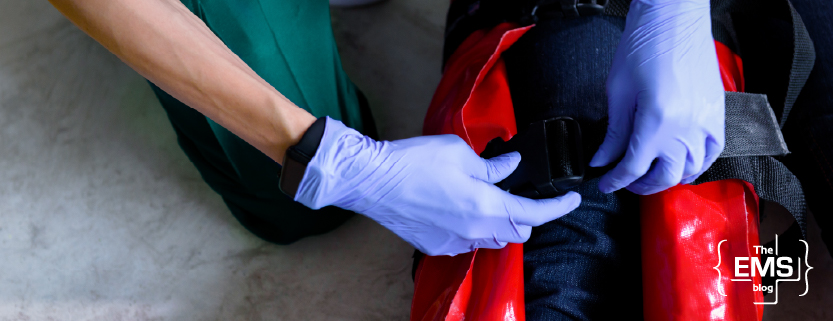
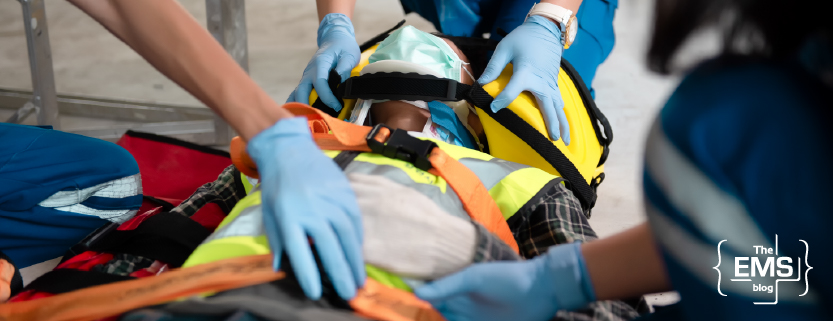
At the same time, fractured limbs are immobilized, and spinal protection is ensured using cervical collars, spinal boards, or vacuum mattresses.
Once the patient is stabilized, transport to the most suitable facility is arranged.
2. Transport to the trauma center
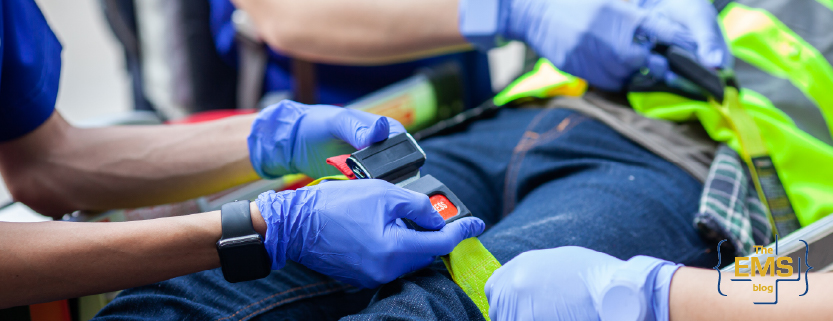
During transport, the crew continuously monitors vital signs—blood pressure, heart rate, oxygen saturation, and level of consciousness—and provides targeted therapy.
Another top priority is temperature control. Hypothermia is one of the three components of the lethal triad, along with acidosis and coagulopathy, which rapidly worsen a patient’s condition.
Modern ambulances are true mobile intensive care units, equipped with multi-parameter monitors, portable ventilators, infusion pumps, and communication systems that allow real-time transmission of clinical data to the receiving emergency department. This enables the trauma team to prepare before the patient arrives, reducing response times and improving prognosis.
Stem’s Contribution
Another crucial factor in this phase is minimizing vibrations, which can increase pain and stress, especially in cases of major trauma. In this field, Stem designs and manufactures shock-absorbing stretcher supports that significantly improve comfort and safety during transport by reducing the vibrations caused by bumps and uneven roads.
Thanks to systems such as Eden-XP, Eden-BS8, Eden HV-2000, Optimus-XP, and— for maritime transfers— Mast 25, patients experience a more stable and controlled journey, with less mechanical stress and better pain control.
One testimony comes from Davide Villa, who in 2018 was involved in a serious road accident resulting in multiple fractures to his right leg. Throughout his rehabilitation—26 sessions in total—he was transported by SOS Pavese ambulances equipped with Stem’s shock-absorbing supports, including Eden, and the assisted loading system Sherpa.
“The amount of vibration transmitted to my leg,” Davide recounts, “was noticeably lower compared to traditional transports. Even acoustically, the difference is clear. You can face these essential transfers more calmly, without heightened anxiety or excessive stress.”
Users of Stem supports report smoother, more comfortable transport, fewer cases of motion sickness, and consequently a reduced need for sedation. For these reasons, such systems are particularly recommended for sensitive, neonatal, and polytrauma transports.
3. Hospital admission
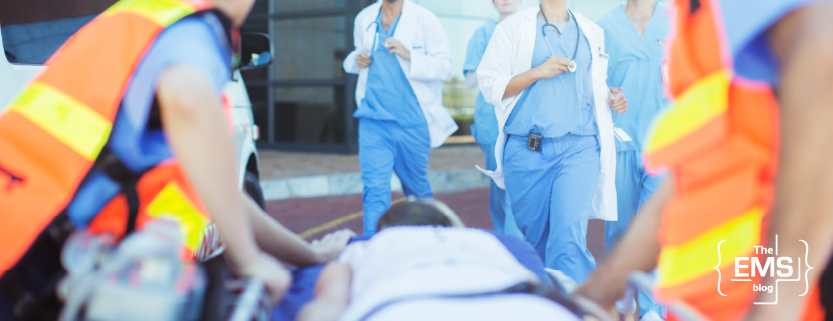
Upon arrival at the emergency department, the Trauma Team Activation protocol is triggered. Surgeons, anesthesiologists, orthopedic surgeons, radiologists, and specialized nurses await the patient in a dedicated trauma bay. As reported by the Metropolitan Hospital “Bianchi-Melacrino-Morelli”, the formation of a multidisciplinary trauma team occurs immediately upon notification of a major trauma. Activation is ordered by the emergency physician when clinical conditions are critical—such as hemodynamic instability, ongoing intubation, or severe anatomical injuries.
The assessment begins again, but with more advanced diagnostic tools. The ABCDE protocol is repeated: airway and cervical spine control, respiratory and circulatory evaluation, neurological assessment, and a full body inspection to identify occult injuries.
During this phase, lifesaving maneuvers may include tracheal intubation, emergency cricothyrotomy, chest drainage, or hemorrhage control by packing and compression. Until spinal injury is excluded, the patient remains fully immobilized on a rigid board with a cervical collar.
4. Stabilization and recovery
Stabilization extends beyond the initial hours. After emergency surgery or resuscitation, the patient is transferred to the intensive care unit for continuous monitoring and complication management.
Priorities remain correcting the lethal triad, preventing infection, and supporting vital organs. Diagnostic tests are performed only once vital functions have been restored. Key investigations include chest X-ray, E-FAST ultrasound to detect internal bleeding, pelvic and cervical spine X-rays, and—when feasible—whole-body CT scanning. The goal is to rapidly identify life-threatening injuries and intervene without delay.
Rehabilitation begins as soon as the patient’s condition allows. It is a long, multidisciplinary process involving physiotherapists, orthopedic surgeons, neurologists, and psychologists, aimed at restoring not only physical but also psychological well-being.
A system in evolution
In recent years, Italy has made significant progress in the management of major trauma. Regional authorities have developed integrated trauma networks connecting emergency vehicles, peripheral hospitals, and reference centers.
However, this network system is still being consolidated: it works well where integration is real, but remains marked by regional disparities.
And what about the rest of the world?
France adopts a highly medicalized pre-hospital model. On-scene response is handled by the SMUR unit, coordinated by SAMU, composed of an emergency physician, a nurse, and a driver-responder. This allows advanced stabilization procedures before transport, following the “stay and play” principle—stabilize the patient on site, then transfer under safer conditions.
Germany operates one of the most structured systems worldwide: the TraumaNetzwerk DGU, which connects all hospitals in a three-tier hierarchy (local, regional, supra-regional) according to case complexity.
Spain manages emergency services regionally through the Comunidades Autónomas. Despite organizational differences, the guiding principle remains “run and play”: begin stabilization while preparing for transfer to the appropriate center.
In the United Kingdom, the system was fully restructured in 2012 with the creation of the Major Trauma Networks. Each network includes a Major Trauma Centre for the most severe cases and several Trauma Units for stabilization and onward transfer.
The philosophy contrasts with the French model: physicians stay in hospital, while highly trained paramedics operate in the field under the “scoop and run” approach—load the patient, start basic maneuvers, and reach the specialized center as quickly as possible.
Conclusions
What changes from one country to another is where advanced expertise is concentrated. In France and Germany, it is deployed in the field, where emergency physicians intervene pre-hospitally. Italy and Spain adopt a hybrid model —medicalized yet decentralized. The United Kingdom, instead, centralizes specialization in major hospital hubs.
The operational logic varies— in some systems, the hospital goes to the patient; in others, the patient goes to the hospital. But the ultimate goal remains identical everywhere: to turn time into survival.