
SMUR and SAMU: what is the difference?
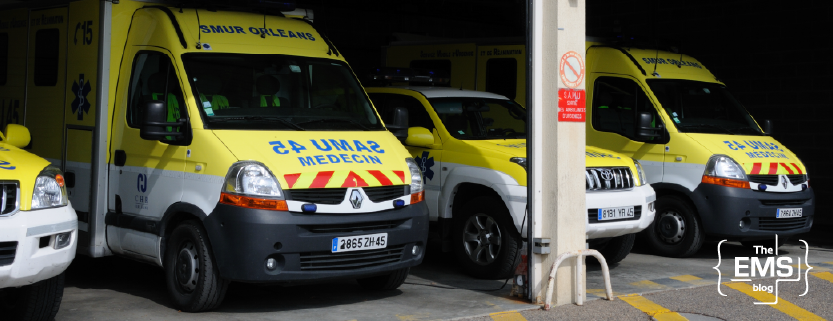
For almost a century, SMUR and SAMU have been providing medical assistance in France’s main cities. Although they may appear similar at first glance, there is a key distinction between these two healthcare services. SAMU does not operate directly in the field but plays a fundamental coordinating role, handling emergency calls and dispatching the appropriate resources. It is SAMU that decides when to send SMUR mobile hospital units to the scene of an emergency. Let’s take a closer look at what differentiates these two services and how to use them correctly in a medical emergency.
What is SAMU’s role?
The acronym SAMU stands for Service d’Aide Médicale Urgente (Emergency Medical Assistance Service). It is essentially a healthcare call center operating 24/7, responding to any request for medical assistance.
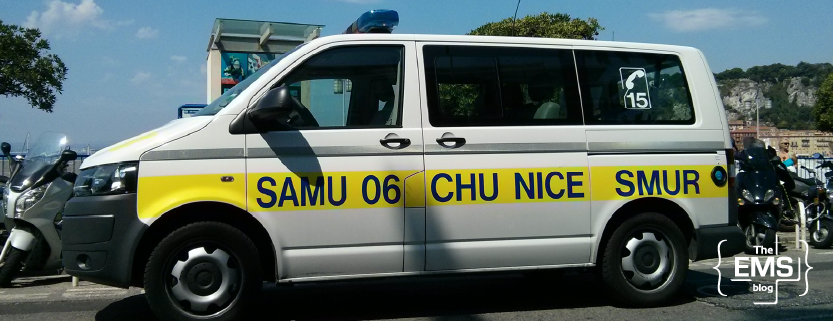
SAMU applies a regulated procedure to provide the most appropriate medical response according to the severity and urgency of the case. This response can range from simple medical advice over the phone to dispatching a SMUR team, sending a doctor for a home visit, or activating other emergency services. SAMU also intervenes in exceptional situations such as major accidents with multiple casualties or disasters.
According to Article R-6311-2 of the French Public Health Code, SAMU’s main responsibilities are to:
- Provide continuous medical support.
- Identify and activate the most appropriate response for each case.
- Ensure the availability of hospital resources suited to the patient’s condition.
- Organise transport to suitable healthcare facilities when necessary.
- Guarantee patient admission to hospital.
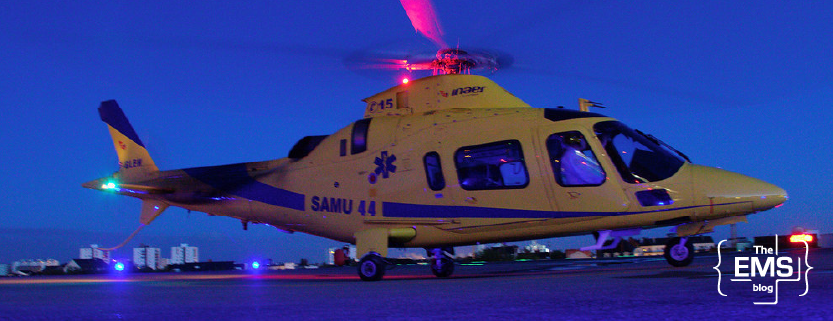
In practice, when contacting SAMU, the call is first answered by a medical regulation assistant (ARM), who collects information such as the caller’s name, address, phone number, and reason for the call. Then, a regulating physician assesses the case and makes a decision, which may involve giving medical advice, sending a private ambulance, dispatching the fire brigade, or mobilising a SMUR team.
Historically, SAMU was created precisely to regulate and coordinate potentially life-threatening medical emergencies, in parallel with the establishment of SMUR mobile units. There is one SAMU for each French département, except Loire, Pyrénées-Atlantiques, and Seine-Maritime, which each have two.
What is SMUR?
SMUR (Structures Mobiles d’Urgence et de Réanimation) consists of mobile hospital units dedicated to direct field intervention in situations requiring urgent care or resuscitation procedures. Emergencies handled include chest pain, major accidents, anaphylactic shock, extensive burns, or cardiac arrest.
A typical SMUR team includes an emergency physician (sometimes a paediatrician or anaesthetist), a qualified nurse, and an ambulance driver. SMUR ambulances are equipped with advanced medical devices to provide immediate care for critically ill patients.
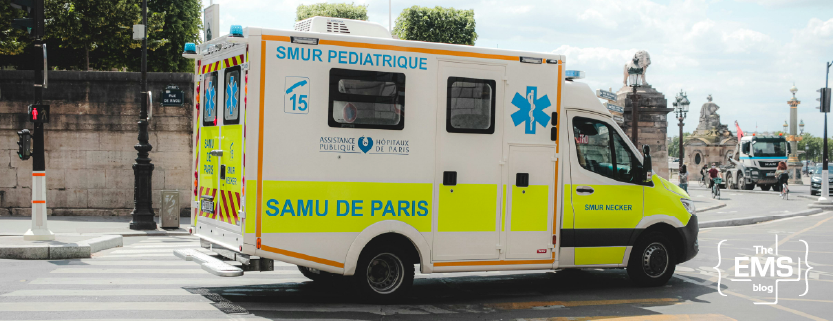
SMUR units are deployed exclusively on SAMU’s instruction and ensure diagnosis, treatment, stabilisation, and transport of patients to appropriate hospitals, often directing them straight to specialised departments rather than to a standard emergency ward.
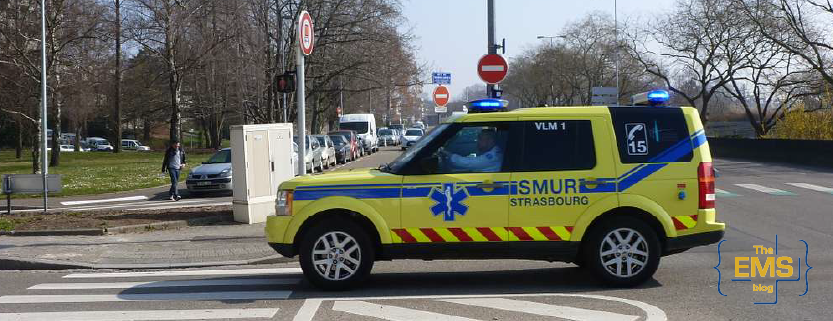
Within the SMUR system, there are two types:
- SMUR blanc: managed directly by hospitals.
- SMUR rouge: managed by the fire brigade.
So, what is the difference between SMUR and SAMU?
As clarified by Journal des Femmes, the confusion between SAMU and SMUR often arises because SMUR vehicles frequently display the word “SAMU.” However, it is important to remember that SAMU is the fixed call centre coordinating emergency interventions, while SMUR refers to the operational teams dispatched directly to the scene.
For this reason, in case of a medical emergency in France, it is recommended to call 15 (SAMU) from a landline or mobile phone, not only for immediate life-threatening situations but also for advice or guidance on medical matters. A medical regulation assistant (ARM) and a regulating physician will then determine the most appropriate response.
Alternatively, the 112 number is available for general emergencies, including police and fire services, while 114 is reserved exclusively for deaf and hard-of-hearing individuals. The latter service receives requests via SMS or fax, managed by the national centre at Grenoble University Hospital, which then forwards them to the appropriate emergency services.