
Ambulances in the United Kingdom and the United States

Sirens blaring, lights flashing, rescuers in action: in the United Kingdom and the United States, as in Italy or Germany, ambulances represent the frontline of emergency medical response. Yet between the centralized model of the NHS and the American EMS system, widespread and decentralized, two profoundly different approaches emerge. While they share certain technical standards, the two countries diverge in terms of crews, protocols, and organizational structures.
United Kingdom
Like Italy, Germany, Spain, and France, the UK applies the European standard EN 1789, adopted as BS EN 1789, which sets the requirements for the design, equipment, performance, and safety of ambulances used to transport and treat patients. The National Health Service (NHS) is the backbone of the British emergency system, particularly with regard to national coordination, ambulance services, planning, and clinical guidelines.
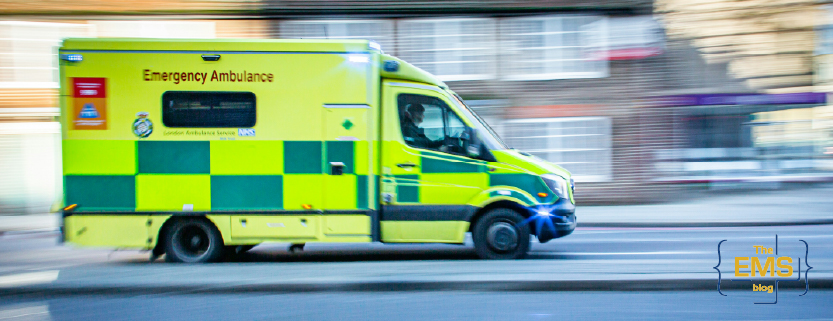
Four categories
Calls to the emergency numbers 999 or 112 are handled by the NHS according to a four-tier system based on clinical severity:
- Category 1: immediate threat to life (cardiac arrest, anaphylaxis). Target response: within 7 minutes.
- Category 2: serious emergencies such as stroke, heart attack, or burns. Target response: 18 minutes.
- Category 3: urgent but less critical conditions (e.g., abdominal pain, fractures). Target response: within 120 minutes.
- Category 4: less urgent cases (mild illness, minor pain). Target response: 180 minutes.
Types of ambulances
According to this classification, the main types of vehicles used are:
- Double Crewed Ambulance (DCA): staffed by a paramedic and an emergency medical technician, deployed to the most urgent calls.
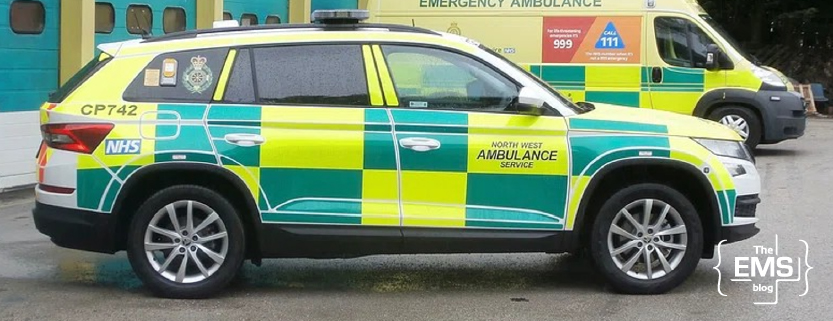
- Rapid Response Vehicle (RRV): smaller vehicles, usually operated by a single paramedic, used to reach patients quickly and provide care while awaiting the DCA.
- Patient Transport Service (PTS): vehicles used for scheduled transfers (e.g., dialysis, discharges), not equipped for emergencies.
- Specialist Incident Teams: units deployed in highly complex scenarios, including HART (Hazardous Area Response Teams) for hazardous environments, and MERIT (Medical Emergency Response Incident Teams), activated in the event of severe trauma. For instance, on 27 May in Tipton, West Midlands, a MERIT team was dispatched to a road traffic accident involving two ambulances, a paramedic officer, and a specialist trauma crew.
Ambulances in the United States
The United States does not apply EN 1789, nor is there an equivalent mandatory standard at the federal level. Moreover, the EMS system is highly decentralized, with authority split among federal, state, and local governments.
American ambulances are divided into three main categories, based on vehicle structure:
- Type I: built on a pickup-truck chassis with a separate patient care module attached. Ideal for ALS (Advanced Life Support) in challenging or rural settings.
- Type II: modified vans, more compact and maneuverable, mainly used for scheduled transports or BLS (Basic Life Support) interventions.
- Type III: vehicles with an integrated chassis, combining features of Types I and II. A balanced option between capacity and maneuverability, widely used in hospital-based and public services.
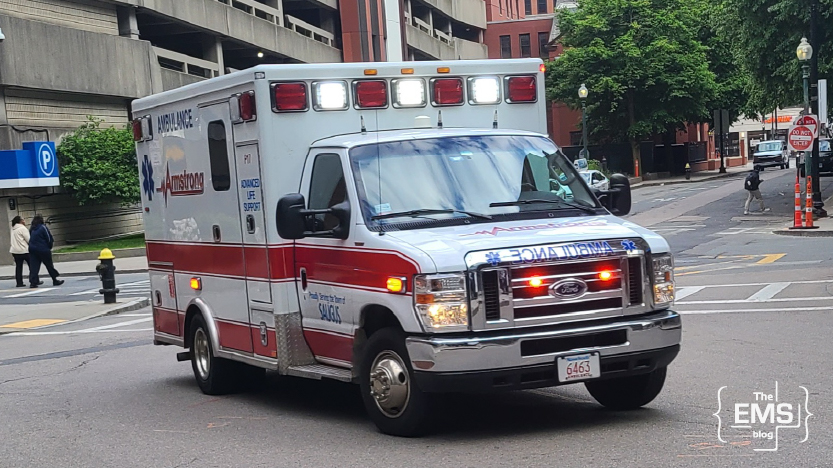
Alongside these standard types, highly specialized units also operate. One example is the Critical Care Ambulance (CCA), designed to transport unstable patients requiring advanced support during transfer, such as mechanical ventilation and invasive monitoring.
Conclusion
The United Kingdom and the United States offer two fundamentally different models of prehospital care. In the UK, the system is based on an integrated national network, with the NHS centrally managing standards, response times, and priority levels while involving both public and private providers. By contrast, the US follows a federal and decentralized model, where ambulances, protocols, and operational organization differ greatly from state to state, even though broad federal technical guidelines exist. Across both countries, the quality of emergency response ultimately depends on highly trained personnel, advanced equipment, and extensive operational networks.
In both systems, however, the quality of emergency response relies on highly trained personnel, advanced equipment, and extensive operational networks.