
Delicate transports. The new guidelines on emergency neonatal transport (STEN)
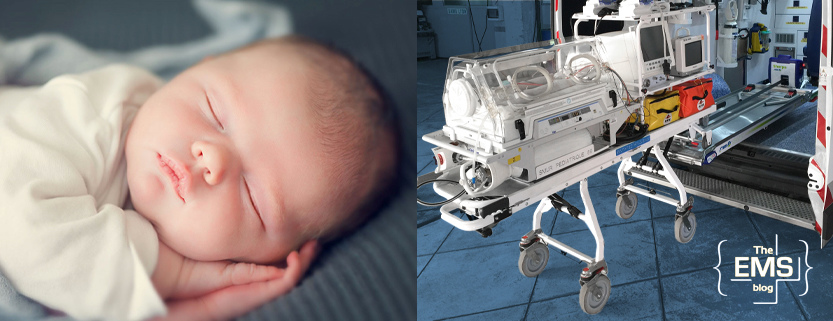
Second edition of the STEN recommendations of the Italian Society of Neonatology (SIN) for neonates, has recently been published and contains indications valid for all types of delicate transport.
What the STEN is?
Emergency Neonatal Transport Service (STEN) was created to respond to unpredictable neonatal emergencies. The STEN is not about in utero transport. Latter is codified by the Mother Assisted Transport Service (STAM), which defines the method of transferring a patient with a high-risk pregnancy who requires more complex care for maternal or fetal pathologies or both of them.
STEN provides for the transfer of the critical newborn patient within the regional perinatal network. In particular, it is activated when it is necessary to transfer newborns from U.O. (Operating Units) of 1st level to operating units where there are “Neonatal Intensive Care”, according to the “Hub & Spoke” model.
Who can be a STEN operator?
STEN personnel is identified among operators with a documented education and professional experience in neonatal intensive care. These are the essential requirements to be able to participate in the STEN activities:
- having carried out transport service with “dedicated shifts”;
- having a function in the activity of the II level neonatal care facility, if any, to facilitate professional update;
- be additional to the staff provided for assistance in the ward and having a function within the intensive care area.
Medical transport of neonates and primary transport
There are four types of transport closely related to the neonatal age: primary transport; inter-agency transport; return transport (back-transport); transport “by competence”; to these is added a fifth transport relating to the infant.
The primary transport
For primary transports we mean those activated for the following requests (age up to 28 days):
- respiratory distress, even mild;
- weight <1,500 g; weight 1,500-2000 g if anticipation of even mild pathologies;
- gestational age ≤ 34 weeks;
- asphyxiation with the need for advanced resuscitation and candidates for hypothermia;
- cyanogenic or duct-dependent congenital heart disease;
- surgical pathologies that could compromise vital functions;
- complex malformations that could compromise vital functions;
- intubated or with central infusion lines;
- alteration of vital parameters;
- sepsis;
- absence of diagnosis in progressively deteriorating infants.
To get to know more about the medical transport of pregnant women, read THIS article on The EMS Blog!
The emergency transport of neonates in Italy
SIN (Italian Society of Neonatology) neonatal transport study group conducted a research-study on the national territory on the basis of the latest data available, i.e. 2019.
Total transports were 6,464, of which 4,901 primary, 951 tertiary and 612 “back-transports”; Among the primary, 305 involved neonates with EG ≤ 30 weeks and 657 with EG between 30 +1 and 34 weeks.
The STEN organization models of the transportation of neonates
There are two STEN organization models most widely used: dedicated STEN and STEN on request. Dedicated STEN is organized according to a model similar to the 118, with dedicated personnel, which only carry out transport activities. STEN on call uses the relevant staff of the TIN (neonatal intensive care), in rotation between the care tasks within the TIN and within the STEN.
Structuring of a dedicated STEN service is designed to deal with a number of annual transports equal to 400 – 600. Compared to the service on request, the advantages consist in a faster response time, in the possibility of facing and optimum solving of extraordinary situations, in the possibility of transfering twins to other regions or abroad and in the high performance specialization.
STEN ambulances
SIN working group pays particular attention to the vehicles and their equipment.
As regards the ambulance activation, the editors of the report clearly state that it is not possible to standardize the procedure. Data from the national survey show that 14 STEN services use 118 vehicles, 11 STEN services use private or non-affiliated vehicles and that 28 STEN services use a dedicated ambulance.
What are the STEN ambulances like?
In general, the ambulance should be dedicated and equipped specifically for the STEN. In particular, it should be a type C ambulance as defined by the EN1789 standard, i.e. equipped with an intensive care unit. Ambulance in use at STEN – reads the report – is equipped with a fastening system for the transport module to the platform. It is desirable that it be equipped with a shock-absorbing type support.
The musts of the ambulances transporting the neonates
Ambulances must be equipped with 12V direct current and 220V alternating current outlets, inverters of adequate power. They must have a number of oxygen cylinders and medical compressed air cylinders such as to guarantee autonomy for the longest journey that each local STEN is required to make, with the addition of 50% of the foreseen stock, in order to guarantee supply gas to the patient in the event of an ambulance breakdown or transit difficulties, traffic or adverse weather conditions, for example.
A second (reserve) emergency ambulance, for reasons of cost, may not be equipped with a shock-absorbing stretcher-support, but must be equipped with electrical and oxygen devices. Moreover, it must be available to replace the ambulance dedicated to the STEN stopped for breakdown or maintenance.
The importance of a shock-absorbing stretcher-support for neonates
Therefore, if according to Italian regulations the shock-absorbing stretcher support is not mandatory, for neonatologists it can only be avoided in the event of an ambulance dedicated to the STEN being stopped.
The main function of the shock-absorbing stretcher support
It is important to point out the main function of the shock-absorbing stretcher support in neonatal medical transport, and the reasons are soon explained: neonatal transport is a very delicate procedure, especially due to the risk of neurological complications in neonates up to 28 days, whose musculoskeletal system is still in the training phase. An ambulance is inevitably subject to bumps, jolts, sometimes sudden braking. All this can cause serious damage to the newborn who, not being able to maintain a rigid position, runs the risk of suffering the detachment of the endotracheal tube. In addition, to avoid the risk of SIDS (Sudden Infant Death Syndrome, the “sudden death syndrome”), the infant must assume a supine position for the duration of the transport.
How are the neonates transportated?
Newborn is placed in a specific transport incubator that is fixed onto the stretcher.
SIN focuses in particular on the loading and unloading procedure, which is considered an extremely delicate phase. Not surprisingly, the description provides for the use of a shock-absorbing stretcher support, the only device capable of ensuring an essential level of comfort and safety for this type of operation.
In order to optimize neonatal transport – as well as bariatric transport – it may be needed a shock-absorbing stretcher support.
STEM inventions for the purposes of neonatal transport
The stretcher-support EDEN
An example is the stretcher-support EDEN, equipped with a performant hydro-pneumatic suspension that not only guarantees the reduction of the effects of vibrations and stresses in long and bumpy transport (bumps and rough roads), but also adjusts automatically based on the weight of the patient. Ensuring the same level of comfort within a range between 0 and 400 kg of maximum load.
Sherpa system
A further development is possible thanks to Sherpa, the new electronically controlled loading and unloading system that makes the stretcher loading extremely easy and safe. Thanks to the patented S.U.S (Safe Unload System) safety system, all operations can be carried out with maximum safety for both the patient and the operator. Patient does not run the risk of impacts or accidental falls, while it reduces the risks of damage to the musculoskeletal system. As well as the fatigue normally required for the operator.
The Sherpa system, which can also be operated with a bluetooth remote control, is ideal for handling loading and unloading of the incubator, very heavy (150—170 kg) and bulky equipment.
The conclusion
SIN report is a significant picture of the current state of the STEN in Italy. It also contains important information for the correct and safe execution of the medical transport of neonates. A widespread culture of delicate transport is necessary to raise the quality standards of emergency transport.
Stem solution for neonatal transport
 |
Maximum comfort from 0 kg load |
Ideal to load and unload the incubator with maximum safety |
 |