
How to Become an Ambulance Driver in the UK and the USA
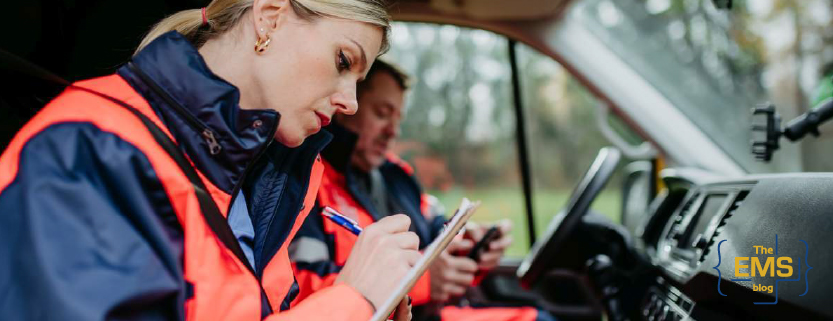
Racing through traffic with lights and sirens on, navigating congested streets, staying calm while someone on the stretcher struggles to breathe. Working as an ambulance driver is anything but “just driving.” It is a profession that blends technical skills, composure, and a strong sense of empathy.
In both the United Kingdom and the United States, driving an ambulance means taking on a fully recognised clinical role. In these systems, the concept of a “pure driver” simply doesn’t exist: whoever sits behind the wheel is always a trained professional, capable of switching between emergency driving and basic clinical care. But what qualifications are required to work as an ambulance driver in the UK and the USA?
What an Ambulance Driver Does in Anglo-Saxon Countries
Whether in the UK or the USA, driving the ambulance is only one part of the job. The driver must ensure the vehicle’s safety, choose the most appropriate route for the emergency, manage lights and sirens, and at the same time assist their partner in moving the patient, checking equipment, and communicating with the dispatch or control centre.
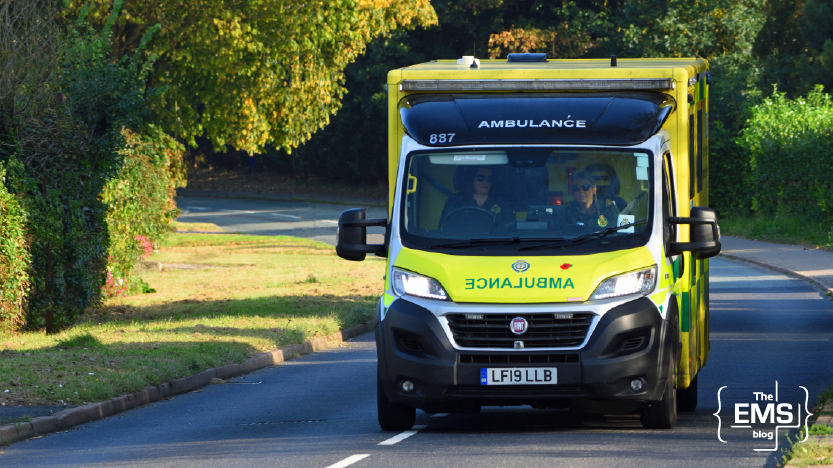
During the same shift, the crew members can swap roles: one call may require driving, the next direct patient care. It is a dynamic role that combines technical and clinical skills.
United Kingdom: C1 Licence, Apprenticeships and Emergency Driving
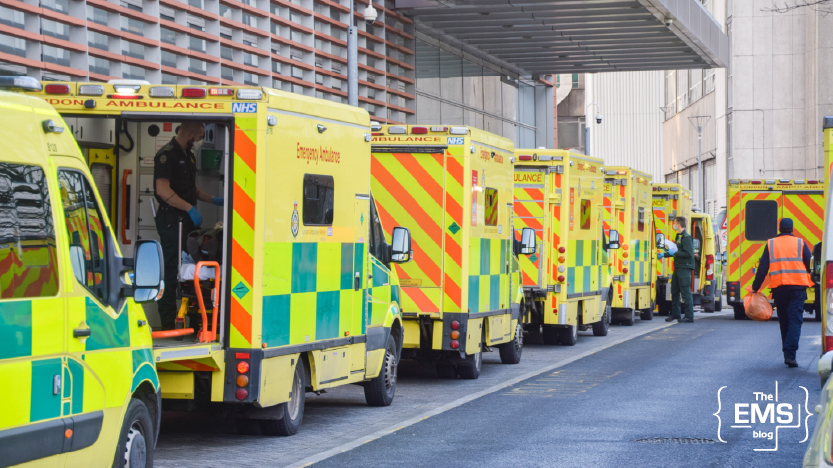
In the UK, ambulance operations are handled by the various NHS Ambulance Trusts, alongside private providers. The first distinctive feature concerns the driving licence. Most NHS ambulances exceed 3.5 tonnes; therefore, the C1 licence (which authorises driving vehicles between 3.5 and 7.5 tonnes) is essentially mandatory for anyone wishing to work on emergency vehicles.
Recruitment notices almost always require a full UK manual driving licence including Category C1, with no more than three penalty points, demonstrating a driving history suitable for emergency operations.
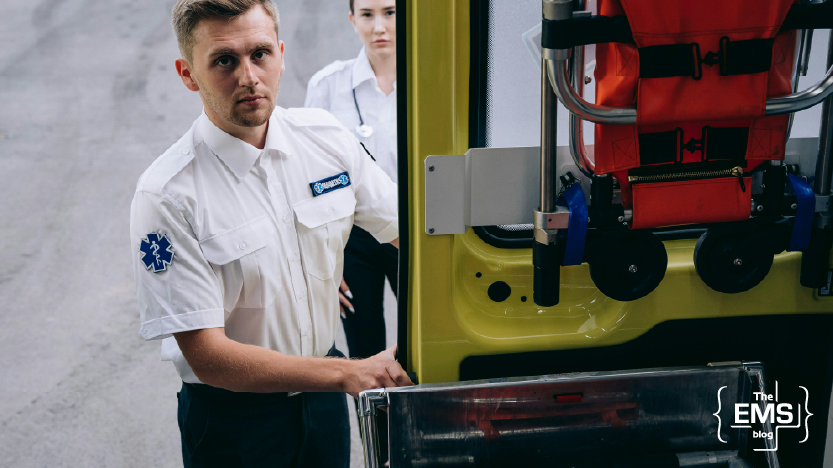
Roles Eligible to Drive an Ambulance in the UK
Access to emergency driving is linked to progressive clinical roles:
• Ambulance Care Assistant (ACA): handles scheduled, non-emergency transport and can drive Patient Transport Service vehicles. It is the entry-level role and allows candidates to gain experience in the operational environment.
• Emergency Care Assistant (ECA) / Emergency Care Support Worker: the first level involved in 999 responses. ECAs are trained through Level 3 apprenticeships that combine on-the-job learning with formal study. They work alongside technicians and paramedics and are authorised to drive under emergency conditions after completing internal training.
• Emergency Medical Technician (EMT) / Associate Ambulance Practitioner (AAP): these roles receive more advanced training (Level 4) and have broader clinical responsibilities. EMTs regularly drive the ambulance, alternating with their crew partner.
• Paramedic: a university-educated professional (Paramedic Science degree or accredited apprenticeship). Paramedics can also drive when required, although they frequently focus on more complex clinical interventions.
Requirements to Begin Working in the UK
To enter one of these roles, candidates must:
• hold a C1 licence or be eligible to obtain one,
• pass medical and fitness assessments required by the Trusts,
• complete an accredited training pathway (apprenticeship or dedicated course),
• complete a blue-light driving course, the internal programme that authorises the use of lights and sirens, risk assessment and legal exemptions under emergency driving.
The UK route can be seen as a step-by-step progression, from scheduled transport to increasingly advanced clinical positions.
United States: Becoming an EMT and Completing EVOC Training
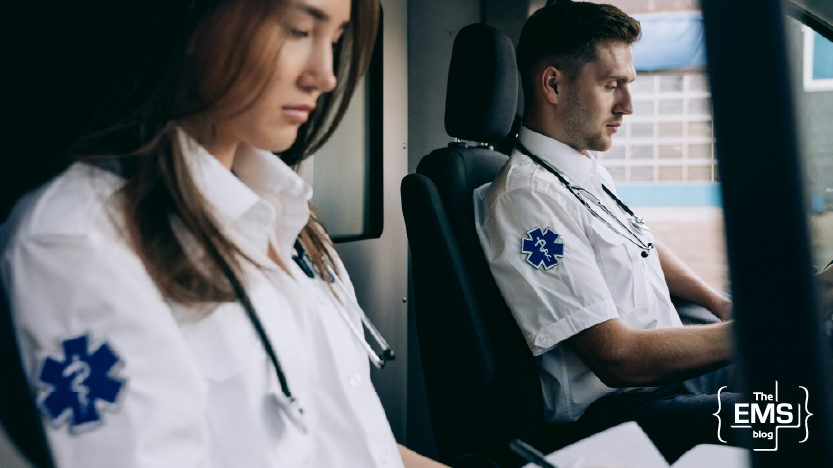
In the United States, the system is far more decentralised. Each state has its own regulations, and counties often add additional requirements. Despite this variety, one element is consistent: the ambulance driver is almost always an EMT or a paramedic, not a separate role.
How to Become an EMT – the First Step Toward Driving
To become an EMT-Basic, candidates typically need:
• a high school diploma or GED,
• enrollment in a state-approved EMT training programme,
• completion of 120–150 hours of classroom instruction, practical skills and simulations,
• passing a certification exam, often the NREMT (National Registry of Emergency Medical Technicians), which includes a computer-based test and a hands-on skills evaluation.
Only after certification can the EMT begin working in the field and, when authorised, take turns driving the ambulance.
Advanced Levels: AEMT and Paramedic
The next level is the Advanced EMT (AEMT), with extended clinical skills, followed by the Paramedic, which requires 1,200–1,800 hours of education combining classroom training, hospital rotations and field internships. Paramedics also drive when necessary, alternating with EMTs.
Driving Requirements: State Licence and EVOC
To operate an ambulance, a valid state driver’s licence is always required. In addition, emergency vehicle training courses are mandatory or strongly recommended, including:
• EVOC (Emergency Vehicle Operator Course)
• CEVO (Coaching the Emergency Vehicle Operator)
• EVOS (Emergency Vehicle Operator Safety)
These programmes focus on safe manoeuvring, correct use of lights and sirens, precision braking, intersection management and legal liability in the event of a collision. Some states require additional certifications—California, for example, has a dedicated Ambulance Driver Certificate.
Where Do They Work?
In the UK, ambulance drivers/clinicians can work for NHS services, private providers or scheduled transport companies.
Accross the USA, they may be employed by municipal EMS agencies, county services, private ambulance companies, hospitals or fire departments.
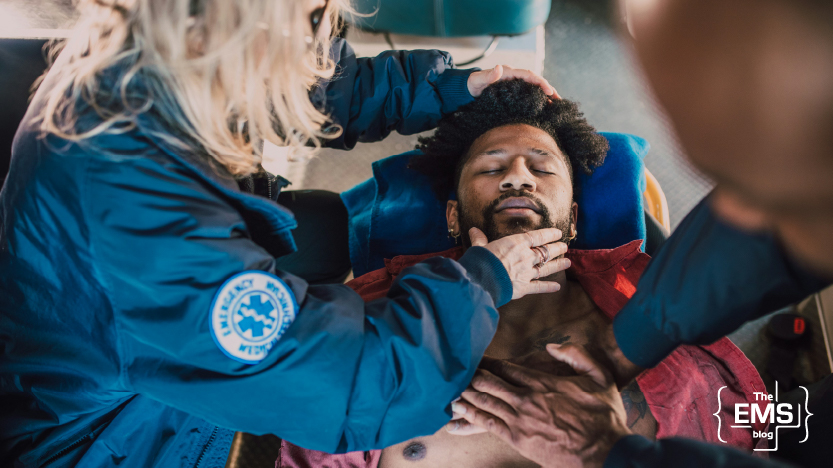
In both countries, driving an ambulance means taking on a dual responsibility: ensuring the safety of the vehicle and the public, while simultaneously contributing to patient care.