
Ambulance accidents: a worrying increase
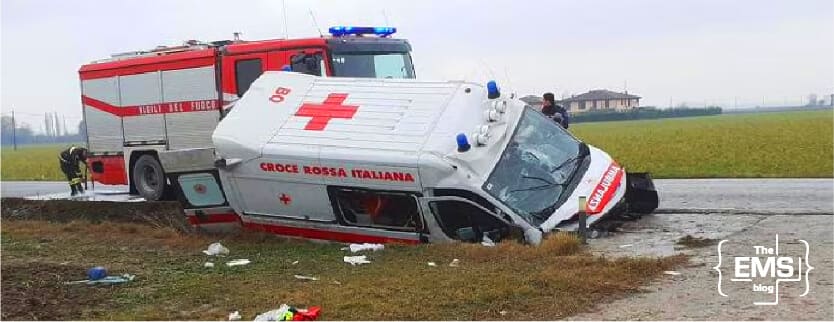
Accidents involving ambulances are on the rise, with serious consequences for patients and rescuers. In this article we will examine the reasons behind such an increase and how regulations and crash tests are trying to improve safety. We will also find out how companies in the industry, such as Stem EMS, are addressing these challenges to protect those on board.
In just over 20 days, between 13th December 2023 and 4th January 2024, seven serious accidents involving ambulances occurred in Italy during rescue services. Nine people, including medical staff and the patients transported, lost their lives in these accidents. However, the list of incidents does not stop there. On the 17th of July, in Rovigo, an ambulance on duty was swept away, injuring six people. These tragic events raise crucial questions about the safety of emergency vehicles and compliance with traffic regulations by other drivers.
Road safety and ambulance accidents
Road safety is a critical imperative, especially in the context of emergency vehicles such as ambulances. Compared to the previous year, the ISTAT 2022 report shows a 3.2% increase in ambulance accidents in Italy, with a total of 1,132 accidents and 37 deaths. The most affected regions are Lombardy and Veneto, highlighting the seriousness of the situation. These data underline a growing national trend towards more frequent and serious accidents involving emergency vehicles.

A European overview of the phenomenon
As Transport Europa reports, there were 20,640 deaths in road accidents in Europe in 2022. An increase of 4 per cent compared to the previous year. Although some countries have seen improvements, other countries, including Italy and Spain, show worrying trends.
In Germany, the Federal Highway Research Institute (BASt) reported six deaths in accidents involving emergency vehicles in 2022. Such data highlight the urgent need for a targeted action at European level to improve road safety, not only in Italy, but throughout Europe.
The main causes
As reported by the German newspaper Zeit, the main causes of accidents involving emergency vehicles include:
- Distraction of road users;
- Excessive speed;
- Heavy traffic and parking in violation of regulations.
Distraction caused by the use of smartphones and earphones is a significant problem, as it reduces the ability of users to perceive emergency signals.

European regulations
Ambulances and the medical equipment used inside them must comply with a number of specific regulations to ensure the safety of patients and medical personnel. These regulations are essential tools to ensure that every ambulance and medical equipment is properly prepared to deal with extreme operating conditions. This requires fitters and manufacturers to subject vehicles to meticulous “crash tests” and rigorous testing to verify their ability to withstand significant stresses and maintain an optimal level of functionality and safety.
The goal of these procedures is to ensure that every component, from the vehicle’s interior fitting to the medical equipment inside, meets the highest safety standards.
At the European level, there are mainly two reference regulations: EN 1789 and EN 1865.
EN 1789
EN 1789 defines the requirements for the design, testing, performance and equipment of ambulances used for the transport and care of patients. The purpose of this regulation is to ensure the safety and reliability of the ambulance under first failure conditions.
This regulation is critical to obtaining European approval for ambulances, as it focuses on the safety of the medical compartment intended for the patient. It requires that all on-board medical equipment and devices are securely fastened and able to withstand severe acceleration, simulated through the 10g dynamic test. This test verifies that all equipment can withstand accelerations equal to ten times the force of gravity, in each direction (longitudinal and lateral), ensuring that no object can become a danger in the event of an accident.
EN 1865
EN 1865 establishes minimum requirements for the design and performance of equipment used to transport patients, including stretchers, chairs, and stretcher supports. The stretcher support is an essential element within the healthcare compartment for several reasons. First, it represents the interface point between the vehicle and the patient, which is why it must meet certain specific characteristics. For example, it shall not have sharp edges, which may be dangerous. This regulation ensures that such devices are safe not only for the patient, but also for the caregivers using them, as the mass and size of the supports can pose a serious risk to the safety of the operators inside the ambulance.
In particular, section EN 1865-5 focuses on stretcher supports, defining precise technical and safety specifications that these elements must meet, such as the ability to support loads up to 220 kg and to allow safe loading and unloading of the stretcher, even with weights up to 300 kg. For this reason, it is not enough for the stretcher to have certified fixings. It is essential that its support also passes dynamic tests related to anchorage to the vehicle and be 10g certified by a notified body.
Verification of compliance and importance of cert
Compliance with EN 1789 and EN 1865 standards is crucial to ensure that ambulances and their equipment operate safely. Conformity with these standards is verified through a series of rigorous tests, including 10g and 20g dynamic tests, which simulate the extreme conditions that might occur during a road accident. This ensures that no device can detach from its support, becoming a potential danger for patients and healthcare operators.
Without these certifications, there is a significant risk to the safety of patients and staff in the event of an accident. Stretcher supports, being among the most critical equipment within the ambulance, must not only be certified according to resistance and safety requirements but also pass additional tests. Annex B of the EN 1865-5 standard, for example, defines the limits of manual effort that can be applied to move the supports, reducing the physical load on operators and contributing to the prevention of workplace injuries.
Importance of Crash Tests and Certifications
The crash testing process for ambulances is designed to simulate various collision scenarios and evaluate the vehicle’s ability to protect patients and healthcare staff. During these simulated tests, several aspects are examined, such as the structural integrity of the vehicle, the safety of the equipment inside, and the protection of the occupants.

The entities responsible for conducting crash test change depending on the country, but they include certification institutes and safety organizations recognized at European level. These entities apply stringent test protocols and are authorized to issue certificates of compliance with current regulations.
In selecting entities for crash tests, Stem EMS chose UTAC, a technical agency renowned for its meticulous approach and the high standard of its evaluation protocols. The decision was influenced by their proven experience in the field and their ability to provide an in-depth and detailed assessment, which sets their services apart from those of other entities.
The certification of ambulances and equipment according to European standards is an essential process to ensure the safety of patients and medical personnel. Through rigorous crash tests and adherence to high standards, it is possible to ensure that vehicles and equipment used in medical emergencies are reliable and safe. The choice of competent and recognized certification bodies adds an additional layer of assurance to the quality and safety of emergency medical services.
Interpretation of Italian Regulations in the Healthcare Sector
In Italy, the interpretation of regulations concerning ambulances and medical equipment is based on a detailed approach to ensure compliance with safety standards. As highlighted by Prof. Leonardo Ferrazzi in the EMTC video, legislative rigor must be balanced with the practical needs of the healthcare sector. A deep understanding of the legislative context and the technical specifications required by the regulations is essential for manufacturers and fitters to ensure that vehicles not only meet legal criteria but are also optimized for safety and effectiveness in emergency situations.
A crucial aspect of interpreting the regulations is the continuous update on legislative changes and new safety standards. This requires close collaboration between industry companies, certification bodies, and health authorities to ensure that ambulances and equipment used within Italy remain compliant with the latest provisions.
Stem EMS’s Commitment to Safety
Stem EMS adopts a proactive andinnovative approach to ensure the utmost safety of both operators and patients. The company offers a range of stretcher supports certified to 10g, meeting the highest European safety standards. This guarantees that even in emergency situations, Stem’s equipment effectively protects those who use it. Additionally, many supports undergo dynamic crash tests up to 20g, providing an extra layer of safety for both patients and operators.
Compliance with the EN 1865-5 standard is not just an obligation for Stem but serves as a foundation for building cutting-edge products. Every stretcher support is designed to withstand extreme loads and ensure that loading and unloading operations are carried out with complete safety. A distinguishing feature of Stem is its adherence to the requirements outlined in Annex B of the EN 1865-5 standard, which relates to the handling tests for stretcher supports and defines the maximum manual effort that can be applied to move the support. In this regard, Stem has developed Sherpa, an electronically controlled assisted loading and unloading system that not only prevents the stretcher from falling in case of failure to open the leg during unloading, but also eliminates the physical strain on the operator, making the work safer and more efficient.
Recommendation from the Ministry of Health of 2010
For Stem EMS, safety is a priority that drives the entire design process. The company invests significant resources to ensure that its equipment is reliable and sturdy, providing total protection for healthcare operators and patients, without ever compromising the safety of other road users.
In addition to regulatory requirements, Stem EMS takes extra measures to ensure patient safety during medical transport. Our company endorses the Recommendation from the Ministry of Health of 2010, which sets strict criteria to prevent harm or death to the patient during transport. This commitment reflects Stem EMS’s unwavering dedication to safety as a fundamental mission.
Conclusions
Tackling the increasing frequency of accidents involving ambulances requires a collective commitment to improving road safety. Worrying statistics and safety measures taken by companies like Stem EMS highlight the importance of ensuring the protection of patients and operators. Although Stem EMS cannot directly reduce road accidents, through rigorous testing and certification it contributes to minimizing the consequences of accidents. It is also crucial to promote safe driving practices and empower all road users to improve overall safety and protect those in emergency vehicles.
Ultimately, collaboration between industry companies, institutions, and healthcare professionals is crucial to address the challenges of road safety and to ensure that everyone can travel safely and securely. Before purchasing ambulances and medical equipment, it is essential to check that they meet all applicable regulations, such as the aforementioned EN 1865, as well as relevant European regulations. In order to check whether a product complies with current regulations, it is important to request and consult specific documentation.